
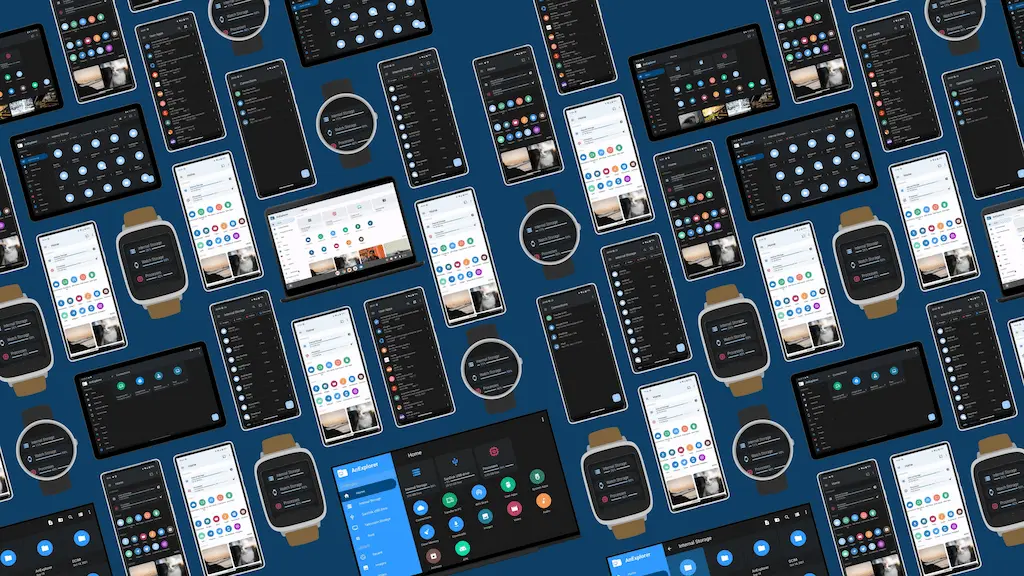
File Manager for Computers with Android
Yes, you can run AnExplorer on a computer, but not as a native Windows, macOS, or Linux app. The supported path is to run AnExplorer inside an Android environment such as BlueStacks, LDPlayer, NoxPlayer, MEmu, WayDroid, or an existing Windows Subsystem for Android install. If you want Android desktop mode from your phone instead, use the separate Android Desktop guide.
Which computer environment makes the most sense?
Use this table to choose the right path before you install anything. If your goal is quick Windows setup, start with BlueStacks. If you already use another Windows emulator, compare LDPlayer, NoxPlayer, and MEmu. If you care more about Linux integration and local control, read the WayDroid guide.
| Environment | Host OS | Install difficulty | Best use case | Keyboard / mouse support | Shared folders | Offline use | Actively supported |
|---|---|---|---|---|---|---|---|
| BlueStacks | Windows, macOS, Linux | Easy | Casual file browsing, Play Store install, drag-and-drop workflows | Excellent | Yes | Yes | Yes |
| LDPlayer | Windows, macOS | Easy to medium | Existing emulator users, APK workflows, shared-folder imports | Good | Yes | Yes | Yes |
| NoxPlayer | Windows, macOS | Easy to medium | Alternate emulator path, file imports, testing | Good | Yes | Yes | Yes |
| MEmu | Windows, macOS | Easy to medium | Alternate emulator testing, APK inspection, host-to-Android workflows | Good | Yes | Yes | Yes |
| WayDroid | Linux | Medium to advanced | Native-feeling Linux container workflow, NAS, privacy-first local use | Good | Yes, with host integration workflows | Yes | Yes |
| WSA | Windows 11 | Medium for existing installs | Older Windows 11 setups, testing, keyboard and snapped windows | Good | Partial | Yes | No for new installs |
Mainstream path: BlueStacks for Windows, macOS, or Linux
For most users, BlueStacks is still the easiest route across Windows, macOS, and Linux because it gives you a ready-made Android environment with Play Store sign-in, windowed mode, keyboard and mouse input, and a simple way to move files between your computer and Android. It works well when you want AnExplorer for quick local file browsing, SMB access, cloud accounts, or browser-based transfers through Device Connect without turning your setup into a developer project.
If you already use another emulator brand, the spokes matter. LDPlayer, NoxPlayer, and MEmu all support Windows and macOS and cover the same basic AnExplorer outcome from different emulator ecosystems: shared-folder imports, APK installation, archive inspection, and Android file workflows in a desktop window. If you already used WSA before Microsoft ended distribution, the WSA guide is still worth keeping for existing Windows 11 systems. For fresh setups, start with BlueStacks, then branch into the other emulator pages only if you already prefer them or need a specific platform option.
Linux: better integration if you want a container instead of an emulator
Linux users usually get the best result from WayDroid. It is a container-based Android environment that can feel more natural on Ubuntu, Fedora, Arch, and other Wayland-first desktops than a traditional emulator. That matters when you want to work with local folders, external drives, and a home NAS in one session, then use AnExplorer to browse network storage, manage archives, or move files to a server through FTP or SMB workflows.
The tradeoff is setup complexity. WayDroid needs the right session, container support, and host configuration. If you want a simpler consumer-style install, Linux usually is not the easiest entry point. If you want the best Linux-native workflow after setup, it often is.
macOS: BlueStacks, LDPlayer, NoxPlayer, or MEmu
macOS users can run AnExplorer through BlueStacks, LDPlayer, NoxPlayer, or MEmu using the same shared-folder, drag-and-drop, and desktop-windowing workflows as Windows users. If you need AnExplorer features on a Mac for regular file access and prefer a lightweight approach, the emulator options work well. Browser-based tools such as the transfer-focused Android to Mac page are also available if you want a browser-first workflow instead.
That distinction matters because this page is about running the Android app on a computer, while Android Desktop is about turning an Android phone or tablet into a desktop-like workspace on an external display.
Developer testing and QA
If your goal is test coverage rather than daily file management, a Windows emulator path can still be the right answer. It lets you validate keyboard handling, mouse support, window resizing, import flows, and transfer behavior before you rely on the app for real work. This is useful when you want to test WiFi transfer, Device Connect, archive extraction, or SMB access from a large display without using a physical TV, tablet, or headset. If you want multiple Windows QA targets instead of just one, compare LDPlayer, NoxPlayer, and MEmu.
For long-term personal use, choose the environment that matches your operating system. For repeatable QA, choose the environment that is easiest to reset and reproduce.
What AnExplorer enables once it is running on your computer
Inside any supported Android runtime, AnExplorer still works like AnExplorer. You can browse local folders, connect to SMB shares, access supported cloud providers from the cloud guides, copy media to removable storage, and open archives without leaving the Android environment. If you mainly need to move files between your phone and your computer, pair it with Android to PC transfer, Android to Mac transfer, or a browser-based Device Connect session.
Known limitations and when not to use this family
This family is not for native Windows, native macOS, or native Linux builds because AnExplorer does not ship those. It is also not the same thing as Android Desktop, which covers Samsung DeX, Motorola Ready For, and Android 15 Desktop Mode. On computer runtimes, file sharing with the host can vary by platform, performance depends on your host hardware, and some environments are better for quick use while others are better for controlled local workflows.
If you want the shortest path, use BlueStacks. If you already prefer a Windows emulator brand, use LDPlayer, NoxPlayer, or MEmu. If you want deeper Linux integration, use WayDroid. If you already have it installed, WSA still works as a legacy route, but it is no longer the recommended starting point.