
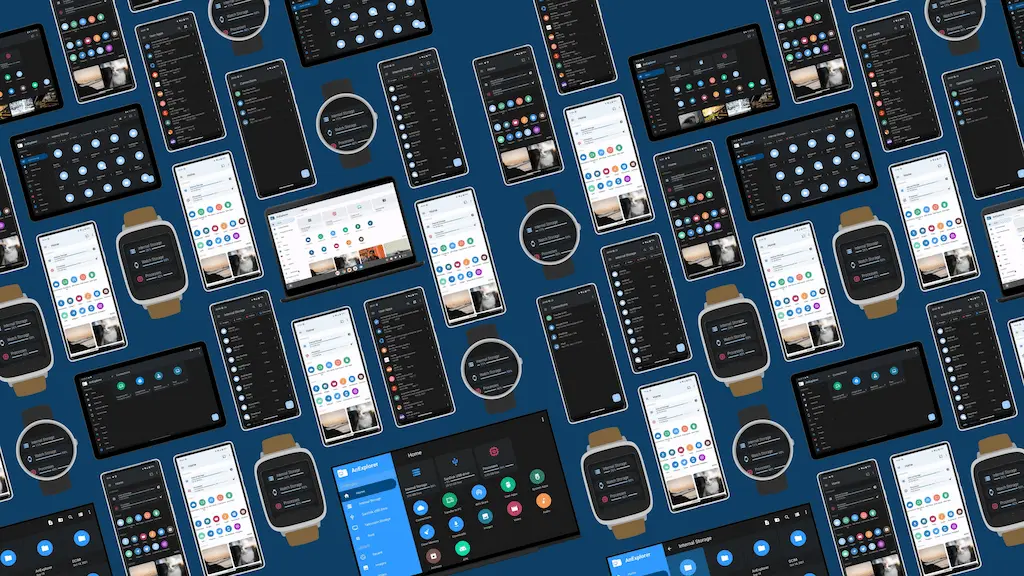
File Manager for WayDroid
Yes, AnExplorer works well in WayDroid, and for Linux users it is often the best way to run the app on a computer. WayDroid gives you a container-based Android environment that can feel more integrated than a traditional emulator, so AnExplorer becomes practical for local folders, SMB and NAS access, removable drives, and browser-based Device Connect workflows on Ubuntu, Fedora, SteamOS, and other Wayland desktops.
Why WayDroid is the Linux-first option
WayDroid is attractive because it behaves more like Android living alongside Linux than Android faked inside a generic emulator shell. That difference matters if you want AnExplorer for day-to-day file work on a desktop or handheld Linux device. You can keep the workflow local, use offline storage, and connect to your own LAN services without making your setup depend on cloud-first tools.
Compared with BlueStacks, WayDroid is less consumer-friendly but often more satisfying for Linux users after setup. Compared with WSA, it is still active and worth using in 2026.
Compatibility and requirements
WayDroid is best on Linux systems that already use Wayland or can run the right configuration for it. Official and community install paths commonly cover Ubuntu, Debian derivatives, Fedora, Arch, and SteamOS-style systems. Practical requirements include:
- a compatible Wayland desktop session
- supported kernel and container features
- a current WayDroid image
- enough comfort with Linux package management and troubleshooting
That is why this page targets users who want control, not just the fastest first-run experience. If you want the shortest path on Windows, use BlueStacks instead.
How to install AnExplorer in WayDroid
Option 1: Play Store or graphical app source
If your WayDroid setup includes a Google Play-capable image or another graphical app source, install AnExplorer there as you would on Android.
Option 2: APK install
- Download the APK from Download.
- Start the WayDroid session.
- Install the APK through WayDroid or with the WayDroid app install command.
- Launch AnExplorer from your Linux application menu or from inside the Android environment.
This route is useful for controlled testing, offline setups, and systems where you do not want Play Store sign-in.
Host folder sharing and Linux filesystem workflows
The main reason to choose WayDroid is the Linux workflow around it. You are usually trying to make Android file management useful next to your host OS, not separate from it. That works well for:
- staging files in host folders before moving them through Android apps
- testing how AnExplorer behaves with mounted drives and removable media
- reading downloads, archives, and media files from a Linux-managed workflow
- using Android tools while your real source files stay on Linux
When you combine this with Device Connect, WiFi transfer, and archive handling, WayDroid becomes a strong bridge between Linux desktop work and Android app behavior.
Privacy, offline use, and local-only setups
WayDroid is a good choice for people who want to keep file management local. You can run AnExplorer for offline folders, LAN storage, and removable media without needing to sign into multiple cloud services. That makes it useful for:
- private local backups
- offline document sorting
- home-lab or NAS browsing over SMB
- external SSD and USB-drive workflows
If you do want cloud access later, the cloud guides still apply once the Android environment is ready.
NAS, home server, and external drive use cases
AnExplorer inside WayDroid is especially practical on Linux machines that already talk to a NAS or self-hosted services. You can keep your server on the same LAN, open AnExplorer, and browse SMB shares, transfer media, inspect archives, or move files between Android storage and your own infrastructure.
External drives also make sense here. If your host Linux system already manages the drive well, WayDroid becomes a useful place to test Android-oriented file workflows before sending content to a tablet, TV, or headset.
SteamOS and handheld Linux overlap
WayDroid also matters for Steam Deck workflows, because SteamOS is Linux and some users want Android apps for ROM organization, media storage, or handheld file tasks. On a standard Linux laptop, the same advantages apply: a large screen, your own storage layout, and a relatively direct path between Android tools and Linux-hosted data.
If your main target is the Deck itself, use the dedicated Steam Deck guide. If your main target is Linux desktop integration, stay on this page.
Known limitations and caveats
WayDroid is not the right answer if you want a zero-effort install. Network setup, GPU behavior, and app compatibility can vary by host system. Some APKs on the web are also packaged for the wrong architecture, so getting the app from Download or a proper store source is safer than relying on random mirrors. If your goal is the easiest possible experience, BlueStacks wins. If your goal is Linux-native control with Android app behavior, WayDroid is the better fit.