
As the automotive industry evolves, modern cars from brands like Polestar, Volvo, Honda, Chevrolet, and Renault are shipping with Android Automotive OS (AAOS) baked directly into the dashboard. Unlike Android Auto (which merely mirrors your phone screen), Android Automotive OS is a completely independent operating system running on the car's internal hardware. Because it is a standalone OS, it has its own internal storage drive, meaning you can actually transfer files — like high-fidelity FLAC music collections, movies for the passenger display, or unlisted third-party app APKs — directly to your vehicle.
If your car uses phone projection instead of native AAOS, use the dedicated Android to Android Auto guide instead. This page is specifically for vehicles where the car itself runs Android natively.
The Limitations of Android Automotive
Before transferring files, understand the security constraints that car manufacturers impose:
- No USB debugging by default: Most consumer vehicles lock down developer mode, severely restricting ADB cable access for file pushing.
- Restricted App Store: The Google Play Store on AAOS only surfaces "driving optimized" apps. You cannot natively install traditional phone apps without sideloading.
- Safety-first lockouts: Video playback is restricted to parked mode on virtually all AAOS vehicles. The screen dims or locks video content when the car is in drive.
- Storage varies by vehicle: Some cars have 64 GB internal storage, others as little as 16 GB. USB expansion is the practical solution for large media libraries.
- OTA updates may reset sideloaded apps: Manufacturer firmware updates can sometimes remove apps not installed through the official store.
To bypass the lack of native file control on AAOS, you typically need to install an automotive-optimized file manager on the car.
Preparation: Install AnExplorer on Your Car
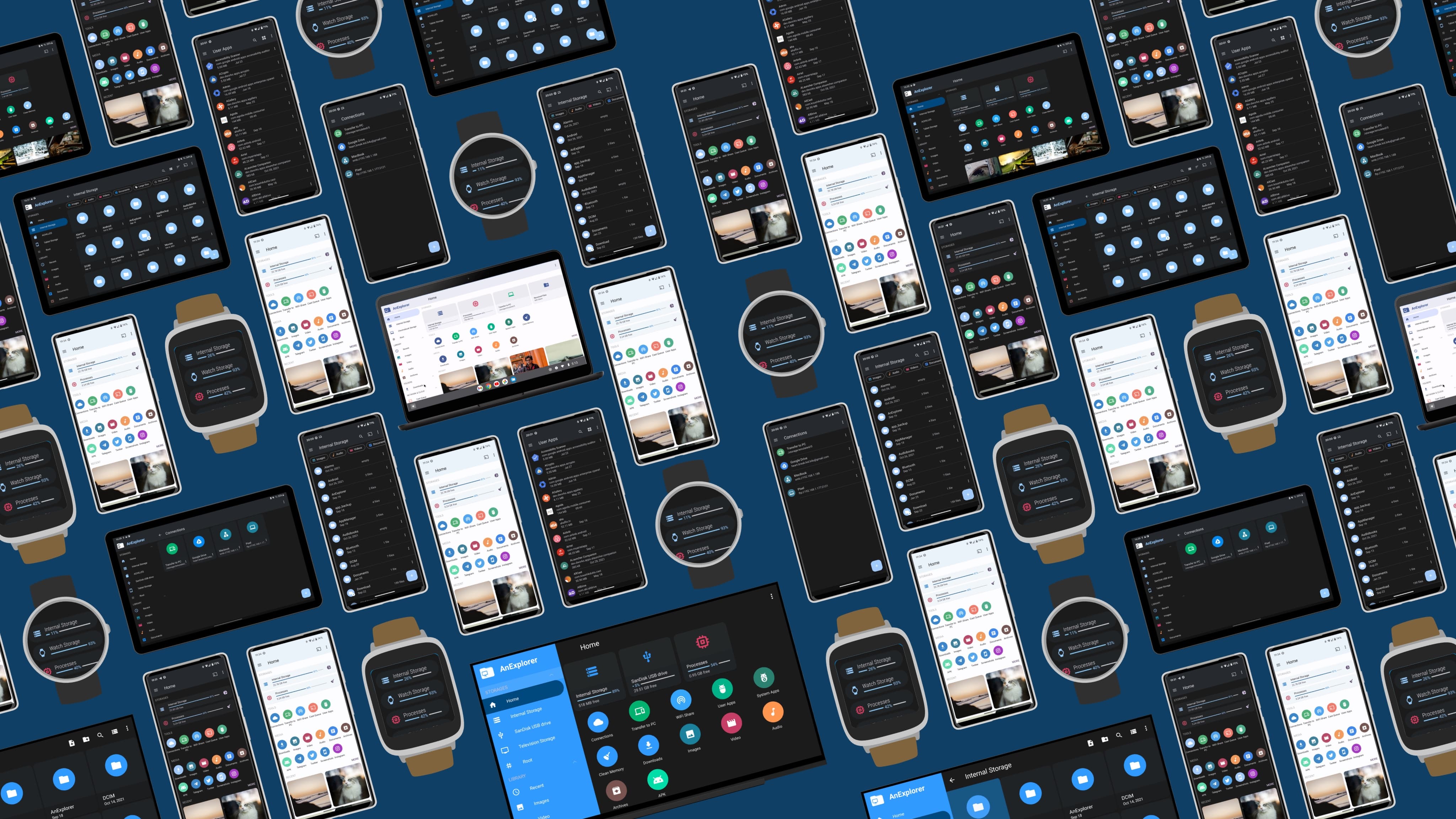
[AnExplorer](https://play.google.com/store/apps/details?id=dev.dworks.apps.anexplorer) is one of the few file management tools officially adapted and approved for Android Automotive OS displays. It handles the ultra-wide aspect ratios of dashboard screens and works with both touch input and rotary controllers.
- Sit in your parked vehicle with the ignition on
- Open the Google Play Store on your car's center infotainment screen
- Search for AnExplorer File Manager and install it
- Launch the app and grant it the required Storage Permissions so it can read and write files to the car's internal flash storage
If AnExplorer is not available in your car's Play Store (some manufacturers restrict app installs), you will need to sideload it or use the USB-only methods described below.
Method 1: USB Drive Transfer (Most Reliable)
The most universally compatible way to transfer files to any AAOS vehicle — works regardless of whether AnExplorer is installed on the car.
Step-by-step:
- Format a USB Flash Drive: Plug a USB drive into your computer and format it to exFAT (preferred) or FAT32. Note that FAT32 has a 4 GB file size limit, so use exFAT for movies or large FLAC collections. Some older head units only recognize FAT32 — check your vehicle manual.
- Load files from your phone to USB: Connect the USB drive to your Android phone via USB-C OTG adapter. Open AnExplorer on your phone. Navigate to the files you want — music in
/Music/, videos in/Movies/, APKs in/Download/. Copy these files and paste them onto the USB drive. - Alternatively, load from computer: Copy files from your computer directly to the USB drive.
- Plug USB into the car: Insert the USB drive into your vehicle's primary data USB port (located in the center console, under the armrest, or in the glovebox — consult your manual, as some ports are charge-only).
- Access on the car: If AnExplorer is installed on the car, open it — the USB drive appears in the sidebar under external storage. Copy files from USB to the car's internal storage. If AnExplorer is not installed, the car's built-in media player should detect and play media files from the USB directly.
USB format compatibility by car brand:
| Car Brand | FAT32 | exFAT | NTFS | Notes |
|---|---|---|---|---|
| Polestar 2/3 | ✅ | ✅ | ❌ | exFAT recommended |
| Volvo EX30/EX90 | ✅ | ✅ | ❌ | Same platform as Polestar |
| Honda (AAOS models) | ✅ | ✅ | ❌ | Check USB port location |
| Chevrolet (AAOS models) | ✅ | ✅ | ⚠️ | NTFS read-only on some |
| Renault Megane E-Tech | ✅ | ✅ | ❌ | Use center console port |
| Ford (AAOS models) | ✅ | ✅ | ❌ | Not all ports are data |
Method 2: Wireless Transfer via Wi-Fi Share
If your AAOS vehicle has AnExplorer installed and both devices are on the same Wi-Fi network, you can push files wirelessly from your phone to the car.
- Connect both your Android phone and the car to the same Wi-Fi network — you can connect the car to your home Wi-Fi while parked in the garage, or turn on your phone's Mobile Hotspot and connect the car to it
- Open AnExplorer on your car display → navigate to Wi-Fi Share → tap Receive
- Open AnExplorer on your Android phone
- Select the files you want to send, tap Wi-Fi Share → Send
- Your car appears in the nearby devices list — tap it
- Files transfer wirelessly to the car's storage
This method is ideal for quick transfers — sending a few albums, a movie for a road trip, or an APK you want to install on the car.
Method 3: Device Connect (HTTP Browser Portal)
If you need to transfer files from a laptop or desktop computer directly to the car without using a USB drive:
- Connect your laptop to the car's Wi-Fi hotspot (many AAOS cars have built-in hotspot capability) or connect both devices to your home router
- Open AnExplorer on the car display, go to the sidebar, and start the Device Connect server
- The car screen displays an IP address and port (e.g.,
http://192.168.1.15:8080) - Open any web browser on your laptop and navigate to that exact address
- A web-based file manager for your car appears — you can drag and drop files from your laptop directly into the browser to upload them to the vehicle's internal storage
- Files appear immediately in the car's storage after upload
Device Connect uses HTTP only — it is the sole server mode available. There is no FTP or SFTP server running on the car in this configuration.
Method 4: Cloud Storage Bridge
If your AAOS vehicle has internet connectivity (built-in cellular or connected to Wi-Fi):
- On your phone or computer, upload files to a cloud service that your car can access (Google Drive works natively on AAOS)
- On the car's screen, open Google Drive or another cloud-enabled app
- Download files from the cloud to the car's local storage
- If AnExplorer is installed on the car, use it to access cloud storage directly and copy files to local storage
This method is useful when you are not physically near the car but want content ready for your next drive.
Method 5: Bluetooth File Transfer (Small Files Only)
For very small files (individual MP3s, documents under 10 MB):
- Pair your phone with the car via Bluetooth (usually already done for phone calls)
- On your phone, select a file in AnExplorer → tap Share → Bluetooth
- Select your car from the Bluetooth targets
- Accept the transfer on the car's screen
Bluetooth transfer is extremely slow (2-3 MB/s maximum) and impractical for media libraries. Use it only for single documents or small files in a pinch.
Speed Comparison
| Method | Typical Speed | Time for 5 GB | Reliability |
|---|---|---|---|
| USB drive (exFAT) | 20–80 MB/s | 1–4 minutes | Excellent |
| Wi-Fi Share (5 GHz) | 30–60 MB/s | 2–3 minutes | Good |
| Device Connect (HTTP) | 30–60 MB/s | 2–3 minutes | Good |
| Cloud download | 2–20 MB/s | 4–40 minutes | Depends on connectivity |
| Bluetooth | 2–3 MB/s | 30+ minutes | Poor for large files |
Sideloading Apps on Android Automotive
If you transferred an .apk file to install a custom app not available in the car's app store:
- Locate the transferred APK file via AnExplorer on the car
- Tap the APK file to execute it
- A security prompt appears stating that installing from unknown sources is blocked
- Tap Settings on that prompt → toggle the switch to allow AnExplorer to install unknown apps → press back
- Tap the APK again to complete the installation
Warning: Apps sideloaded to Android Automotive may not scale correctly to the ultra-wide aspect ratios of dashboard screens (often 2560x1600 or wider). Sideloaded apps could also cause system instability or interfere with driving-critical functions. Sideload with caution and only while parked.
Common apps to sideload on AAOS:
- Alternative music players (Poweramp, Musicolet) for local FLAC playback
- Video players (VLC) for passenger screens
- Alternative navigation (OsmAnd, Sygic) for offline maps
- File managers (AnExplorer) where not available in the car's store
Troubleshooting Common Issues
USB drive not detected by the car
- Verify you are using a data USB port, not a charge-only port. Many cars have both — the manual identifies which is which
- Try reformatting to FAT32 if exFAT does not work — some older AAOS firmware versions have limited exFAT support
- Ensure the USB drive has a single partition (multi-partition drives may confuse the car's OS)
- Try a different USB drive — some high-capacity drives (256 GB+) are not recognized by all head units
Wi-Fi Share devices cannot find each other
- The car must be connected to the same Wi-Fi network as your phone — check the car's network settings in the AAOS settings menu
- Using your phone's mobile hotspot is the simplest way to create a shared network if no external Wi-Fi is available
- Some cars disconnect from Wi-Fi when the ignition is in accessory mode — ensure the engine is running or the car is in ignition-on mode
Transferred media does not appear in the car's media player
- The car's built-in media player may only scan specific folders. Try placing music in
/Music/and videos in/Movies/on the car's internal storage - After copying files, restart the car's infotainment system to trigger a media scan
- Use AnExplorer on the car to verify files actually landed in the expected location
APK installation fails with "App not compatible"
- The APK must be compiled for ARM64 (aarch64) architecture — x86 APKs will not run
- The APK may require a newer Android version than your car's AAOS build supports
- Some APKs require Google Play Services features that are restricted on automotive builds
Storage full on the car
- AAOS vehicles typically have 16–64 GB of internal storage, much of which is consumed by the operating system and pre-installed apps
- Use AnExplorer to check available space: open the app and look at storage indicators
- Consider streaming media from a USB drive rather than copying to internal storage — AnExplorer can browse and play from USB directly
Related Guides
- Transfer Android to Android Auto — For phone-projection cars (not AAOS)
- Transfer Android to Android — Device-to-device file transfer
- Open APK Files on Android — Deep dive into app packages and sideloading
- WiFi File Transfer — Protocol information for wireless transfers
- Transfer Phone to USB — USB OTG guide for preparing drives