
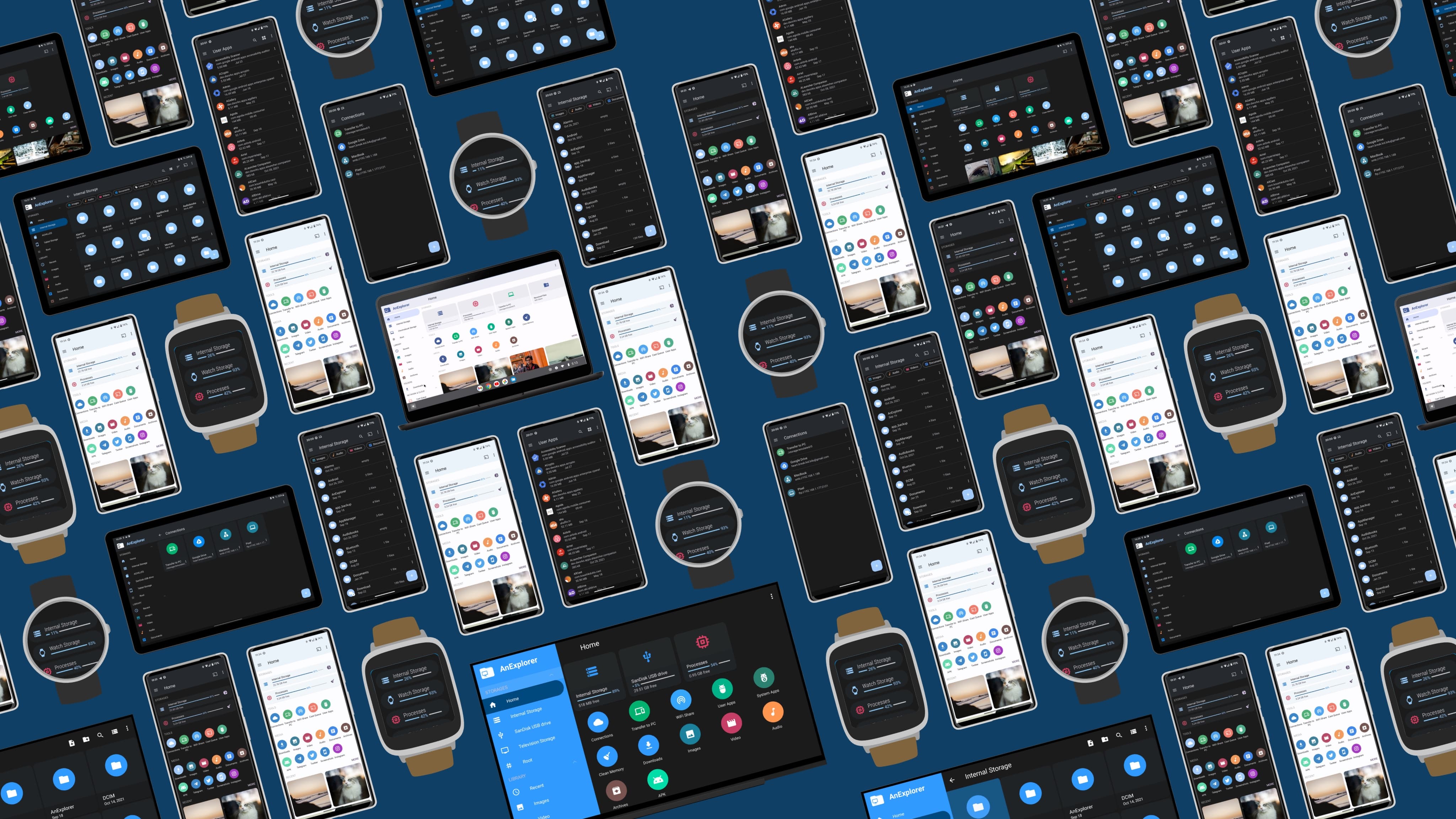
Android Auto is a projection system, not a separate storage device inside the car. When people say they want to transfer files to Android Auto, what they usually mean is this: put the files on the Android phone, connect that phone to the car over Android Auto, and browse or play the prepared content from the dashboard. That is exactly where AnExplorer helps — it gives you a powerful preparation layer before the projection layer takes over.
Understanding this distinction is critical. Your car dashboard running Android Auto does not have its own internal file system that you can write to. It mirrors approved app interfaces from your phone onto the car screen with a simplified, driver-safe UI. The phone remains the source of truth for all content. So when you manage your files correctly on the phone, Android Auto becomes seamless to use once you plug in or pair wirelessly.
What Android Auto Can and Cannot Do
Android Auto is built around safe, simplified car interfaces with limited interaction while driving.
Good fit for Android Auto
- Offline music libraries organized into clear album and playlist structures
- Podcasts and audiobooks downloaded for offline playback during commutes
- Media stored on USB OTG or SD storage attached to the phone
- Cloud-backed files that were already downloaded or organized on the phone before driving
- Navigation voice prompts and data that apps access from local storage
Not a good fit for Android Auto
- Copying files into the car's own internal storage (the car has no writable storage via Android Auto)
- Installing APK files into the car system
- Full folder editing or file browsing on the dashboard while driving
- Accessing hidden dashboard storage partitions or infotainment system directories
For those native car workflows, use Android Automotive OS instead — that is a completely different platform with its own internal storage.
Method 1: Prepare Files on the Phone Using Internal Storage
This is the standard Android Auto workflow that works with every compatible car on the market.
- Open AnExplorer on your Android phone
- Navigate to your music, podcast, or audiobook files — whether they are in Downloads, SD card, or scattered across multiple folders
- Create a clean folder structure: for example,
/Music/Commute/for driving playlists,/Music/Audiobooks/for long-trip content - Move or copy all relevant media files into these organized folders using AnExplorer's cut/copy/paste operations
- If you have content on a USB OTG drive or SD card, use AnExplorer to copy it to internal storage where media scanner apps can index it
- Connect your phone to your car with wired USB or wireless Android Auto
- Open your preferred media app (Spotify, YouTube Music, Pocket Casts, or a local player like Poweramp) from the Android Auto dashboard — it will find the organized media
This keeps the car side simple because all heavy file management happened before you started driving.
For example, this is the method that makes the most sense if you drive a Hyundai, Kia, Toyota, Honda, Ford, Chevrolet, BMW, or Volkswagen and want one reliable routine for commute audio, family-trip downloads, and travel backups.
Method 2: Use USB Storage Attached to the Phone
If your phone supports USB OTG (most phones from 2016 onward), AnExplorer can use external USB storage as part of your Android Auto media setup.
- Attach a USB flash drive to your phone using a USB-C to USB-A OTG adapter
- Open AnExplorer — the USB drive appears in the sidebar or Home screen
- Organize the media you want available during driving — create folders, rename files, remove duplicates
- Either leave files on the USB drive (some media players can scan external storage) or copy them to internal storage for guaranteed access
- Disconnect the USB drive, start Android Auto, and browse the prepared library from the dashboard
The USB drive stays attached to or managed from the phone, not the car head unit. Android Auto still sees the phone as the content source regardless of where you originally stored the files.
Method 3: Wi-Fi Share from Another Device to the Phone
If someone else has the content you need — a family member's phone with a shared playlist, a tablet with downloaded podcasts, or a laptop with a music collection — use AnExplorer's Wi-Fi Share to get those files onto your phone before driving.
On your phone (receiving):
- Open AnExplorer → Wi-Fi Share → Receive
- Your phone enters waiting mode
On the sending device:
- Open AnExplorer → select files → Wi-Fi Share → Send
- Tap your phone in the nearby devices list
- Files transfer at Wi-Fi speed — a 500 MB album takes about 10 seconds on 5 GHz
Once received, the files are on your phone's storage and immediately available through Android Auto media apps.
Method 4: Sync from Cloud Before You Drive
If your internet connection is unreliable on the road, download cloud files before leaving home:
- Open AnExplorer on the phone
- Connect your cloud service — Google Drive, Dropbox, OneDrive, or any supported provider
- Navigate to the music, podcast, or audiobook folders in your cloud
- Copy the files you want offline into local phone storage (e.g.,
/Music/Offline/) - Launch Android Auto — your media apps access the local copies during the trip without needing cellular data
This is especially useful for highway driving with weak coverage, border crossings, rural routes, mountain travel, parking structures, or EV charging stops where you want content ready immediately rather than waiting on public Wi-Fi.
Method 5: Device Connect from a Computer
If your media collection lives on a laptop or desktop and you want to push it to your phone before a trip:
- Open AnExplorer on your phone → Device Connect → Start
- Note the address shown:
http://192.168.x.x:8080 - On your computer, open any browser and navigate to that address
- Use the Upload button to send music files, audiobooks, or podcast episodes directly from your computer to your phone
- Files land in the upload folder on your phone — move them to
/Music/or your preferred structure using AnExplorer
This eliminates the need for USB cables between computer and phone while still getting large libraries transferred quickly over your home Wi-Fi.
Speed Comparison for Getting Files Onto Your Phone
| Method | Typical Speed | Best For |
|---|---|---|
| Wi-Fi Share (from another phone/tablet) | 30–80 MB/s | Quick sharing from family devices |
| Device Connect (from computer) | 30–80 MB/s | Uploading music libraries from laptop |
| USB OTG (flash drive) | 20–80 MB/s | Offline media from external drive |
| Cloud download (Google Drive, Dropbox) | 2–20 MB/s | Syncing subscribed content |
| Bluetooth | 2–3 MB/s | Not recommended for media libraries |
For a typical 5 GB music collection, Wi-Fi Share or Device Connect finishes in about 1–3 minutes. Bluetooth would take over 30 minutes for the same transfer.
Troubleshooting Common Issues
Music files don't appear in Android Auto media apps
- Some media players (Poweramp, Musicolet) need a manual library rescan after new files arrive. Open the player and trigger a "Scan Library" or "Refresh" action
- Android's Media Scanner sometimes misses new files. Restart the phone or use AnExplorer's built-in media scan trigger
- Ensure files are in a standard music format: MP3, FLAC, AAC, OGG, or M4A. Exotic formats may not be indexed
Audio quality sounds degraded through Android Auto
- If streaming via Bluetooth connection to the car, audio is compressed by the Bluetooth codec (SBC, AAC, LDAC). Wired USB Android Auto passes uncompressed audio
- Verify your source files aren't already low-bitrate. AnExplorer shows file details including bitrate — look for 256 kbps or higher for good car audio
Android Auto disconnects frequently
- For wired connections: use a high-quality USB-C data cable — cheap cables cause intermittent disconnections
- For wireless Android Auto: ensure your phone's Wi-Fi is not being throttled by battery saver mode
- Keep AnExplorer's background activity unrestricted in Android battery settings so file operations complete fully
Phone storage is full — can't download more media
- Use AnExplorer to identify large files consuming space: open the app → Storage Analyzer (if available) or sort files by size
- Move completed podcasts or listened audiobooks off the phone — delete or back up to cloud
- Consider using an SD card (if your phone supports it) and organizing media there
Future Parked Media: What Makes Sense to Prepare For
Google's public Android Auto messaging now includes parked games and says more parked experiences are coming. Separately, Android's car-ready mobile app guidance already supports richer parked categories such as video, games, and browsers on Android Automotive first, with Android Auto support expected later.
That does not mean Android Auto is suddenly a full dashboard file manager for photos and video today. It does mean a sensible AnExplorer workflow can prepare for a future where parked-only use becomes more useful. The most realistic scenarios are:
- Building kid-safe offline movie folders before a long family drive
- Keeping short training clips or presentation videos ready on the phone for parked review
- Organizing travel photo exports or gallery folders for downtime at charging stops or pickups
- Separating driving-time audio from parked-time media so the dashboard stays uncluttered
If Android Auto gains broader parked media surfaces later, a carefully prepared phone library will matter even more than it does now.
Device-Specific Tips
Samsung Galaxy phones: Samsung's built-in media apps integrate well with Android Auto. Use AnExplorer to organize files, then Samsung Music or Spotify sees them automatically.
Google Pixel phones: Pixel's tight integration with Android Auto means wireless connection is generally faster to establish. Files placed in /Music/ are indexed almost immediately.
Xiaomi/Redmi phones: Aggressive battery optimization can kill background file transfers. Go to Settings → Apps → AnExplorer → Battery → No restrictions before starting large transfers.
Phones with SD cards: AnExplorer can manage both internal and SD card storage. Some media players only scan internal storage for Android Auto — copy critical media to internal if your car player doesn't find SD card content.
When to Use Android Automotive Instead
Use the Android Automotive path if your vehicle has Google built-in and you need:
- Native in-car app installs on the dashboard hardware
- Direct USB browsing from the car itself
- Local storage inside the dashboard system for permanent media
- APK sideloading or broader file-management workflows on the car screen
That is a different platform. See Android to Automotive.
Related Guides
- Transfer Android to Automotive — for cars with Google built-in (AAOS)
- Transfer Android to Android — phone-to-phone file transfer
- Transfer Phone to USB Drive — USB OTG backup guide
- WiFi File Transfer — protocol details for Wi-Fi Share