
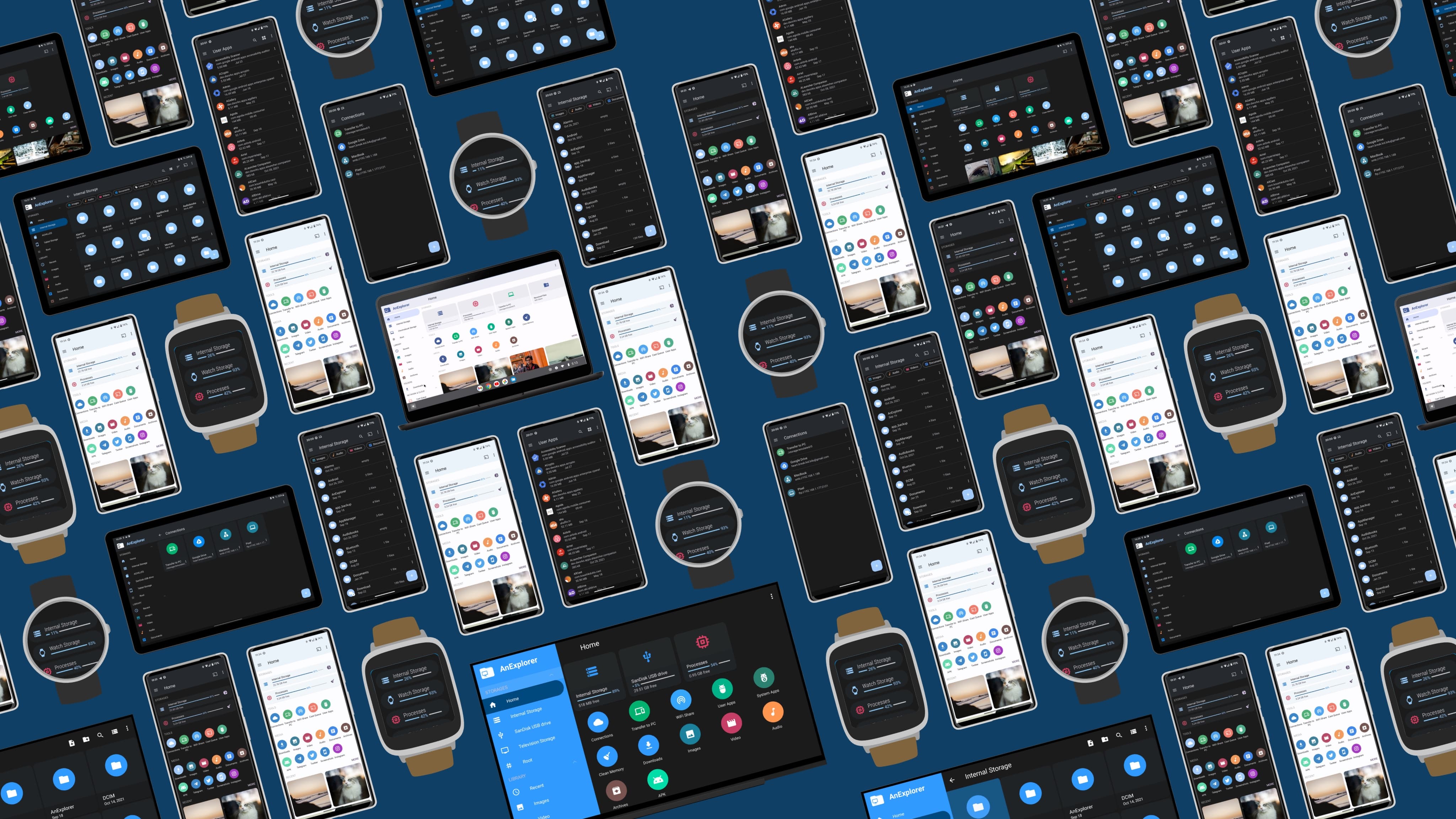
File Manager for Android Gaming Devices
Gaming devices create different file-management problems than ordinary phones. They collect ROM folders, emulator saves, screenshots, BIOS files, patches, artwork, subtitles, controller profiles, and large media libraries across internal storage, microSD cards, USB drives, and home servers. AnExplorer fits this space well because it gives you a real file workflow instead of a bare downloads folder or a minimal system picker.
If your setup is gaming-first, start here rather than the more generic Computers or Tablets families.
Which gaming device page should you read first?
Use the spoke that matches your hardware:
- Steam Deck — best when your storage spans Desktop Mode, microSD, ROM folders, media libraries, and docked workflows
- Retroid Pocket — best for retro handheld users managing ROM sets, save backups, BIOS folders, and archive-heavy libraries
- AYN Odin 2 — best for high-performance Android emulation with large ROM libraries, NAS streaming, and SD card management
- OnePlus Pad — best for a gaming-first Android tablet workflow with controller play, downloads, and large-screen multitasking
If your real use case is an Android runtime on a normal laptop or desktop PC, use the computer hub instead.
Why gaming devices need a better file manager
Gaming hardware is storage-heavy and format-heavy. Even a clean setup usually includes:
- compressed ROM archives and extracted game folders
- save-state backups and exported emulator settings
- screenshots, clips, subtitles, and artwork
- controller configuration files and downloadable mods
- local media for offline travel or couch use
- files moving between a PC, NAS, cloud storage, and the device itself
That mix is exactly where AnExplorer helps. You can inspect archives before extracting them, move files between folders cleanly, connect to SMB storage, and use Device Connect or Android to PC transfer when you need to move content to or from another machine.
Quick comparison
| Device | Best for | Storage profile | Why AnExplorer helps |
|---|---|---|---|
| Steam Deck | Desktop Mode + gaming-library management | Internal SSD + microSD + USB + NAS | Best for mixed storage and docked file work |
| Retroid Pocket | Retro handheld ROM management | Internal storage + microSD | Best for ROM sets, BIOS folders, and save cleanup |
| OnePlus Pad | Gaming tablet downloads + media + multitasking | Large internal storage + cloud + USB-C | Best for large-screen Android file workflows |
Common gaming-device workflows
ROM and archive organization
Gaming users rarely work with only ready-to-play folders. Archives arrive zipped, artwork comes separately, and save backups pile up fast. AnExplorer helps you inspect, extract, rename, and sort those files without switching between multiple utility apps.
That is especially useful when you work with archive management, large retro libraries, and manual file sorting across platform folders.
microSD and removable storage cleanup
Many gaming devices rely on removable storage. Over time, those cards fill with duplicate archives, outdated firmware packages, abandoned save folders, and media you no longer need. AnExplorer gives you a better view of those folders than a basic file picker and makes it easier to clean them up before performance or free space becomes a problem.
NAS and home-server access
Gaming setups often extend beyond the device itself. You may keep ROM archives, Plex libraries, Jellyfin downloads, or backups on a home server. AnExplorer can connect directly to SMB / NAS storage, which is useful when you want to browse, copy, or verify files without moving everything through a separate PC first.
Transfer to and from your desk machine
When your device is only one part of a bigger setup, transfer matters as much as storage. Use Android to PC transfer when your gaming device and computer need to move large files locally, or use Device Connect when a browser-based workflow is easier.
Gaming devices vs other families
Use this family when the hardware itself is gaming-first. That includes handhelds and tablets where ROM management, media libraries, or controller-friendly storage are part of the expected workflow.
Use other families when:
- the device is really a normal PC running Android inside an emulator or container: Computers
- the device is really a normal Android tablet and gaming is secondary: Tablets
- the device is really a phone or tablet driving a monitor with desktop mode: Android Desktop
That separation matters because the search intent is different. Gaming-device users are usually looking for storage and library management, not general Android productivity.
Where to go next
Start with the page that matches your hardware, then branch outward:
The goal is simple: keep your gaming storage organized, searchable, and easy to move before file chaos becomes the real bottleneck.