
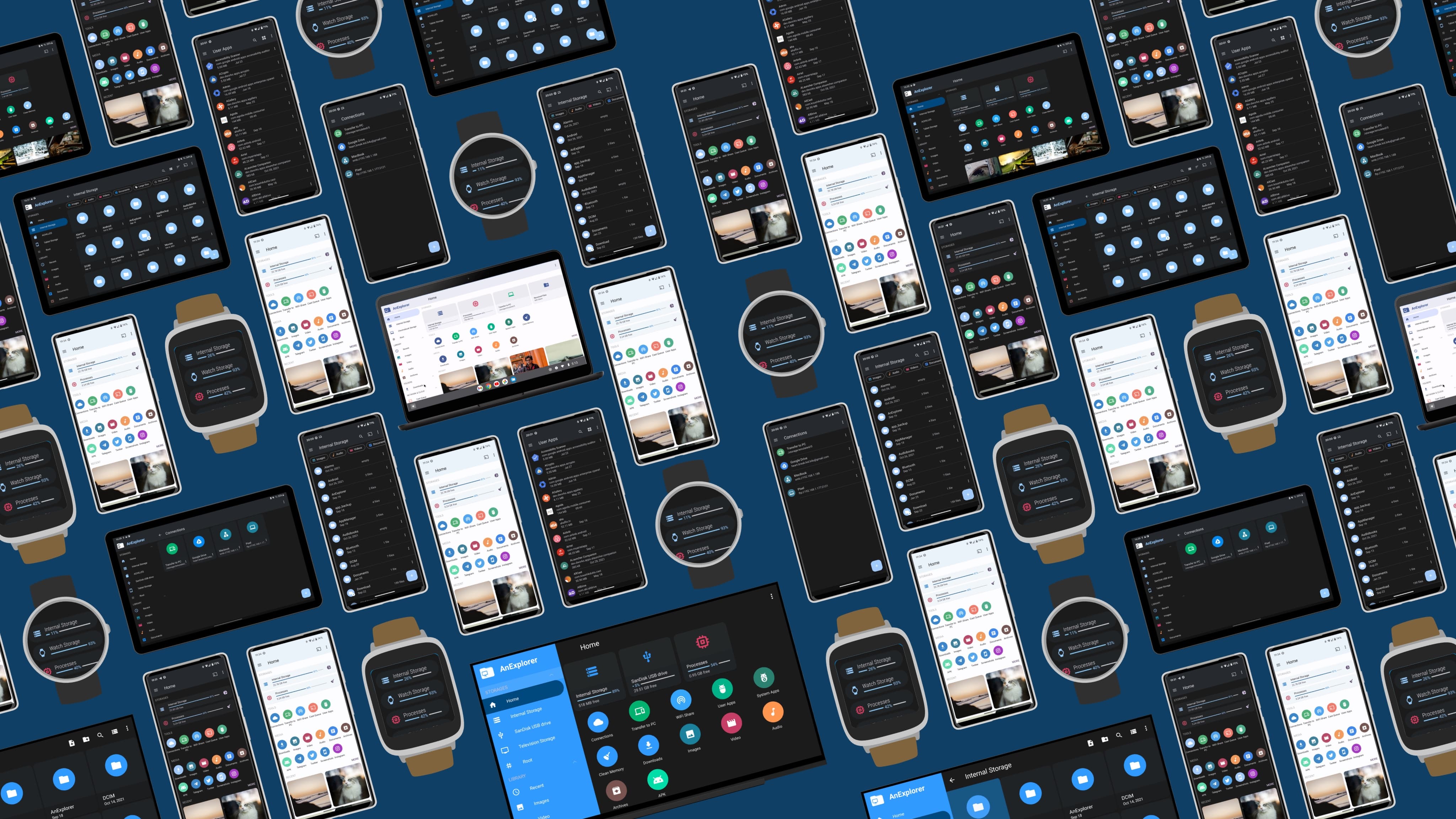
End-to-End Encrypted Cloud on Your Wrist
MEGA distinguishes itself from other cloud providers through zero-knowledge encryption — even MEGA's own servers cannot read your files. Bringing this level of privacy to a Wear OS smartwatch through AnExplorer means your most sensitive files can reach your wrist without ever existing in unencrypted form on a third-party server.
The privacy advantage matters more on wearables than you might initially think. Watches are worn constantly. They accompany you into meeting rooms, through secure facilities, and into personal spaces. Having access to encrypted cloud storage on your wrist means sensitive documents, credentials, personal audio, or private photos remain accessible without trusting intermediate servers with the decrypted content.
How MEGA Encryption Works with AnExplorer
MEGA's encryption is client-side. Your files are encrypted on your device before upload, and decrypted on your device after download. MEGA's servers only ever see encrypted blobs. AnExplorer implements this encryption layer for Wear OS, which means:
When browsing: AnExplorer decrypts file metadata (names, folder structure) locally on the watch so you can navigate your storage. This requires your encryption keys, which are derived from your password and stored securely in the watch's credential storage.
When downloading: The encrypted file transfers from MEGA's servers to your watch, then AnExplorer decrypts it locally. The decrypted file lives on your watch's internal storage. If someone accessed MEGA's servers directly, they would see only encrypted data.
When uploading: Any file you send from the watch to MEGA gets encrypted on the watch before transmission. Voice recordings, health data exports, or screenshots encrypt locally before leaving the device.
This means the security model is consistent with MEGA on any other platform. The watch implementation does not compromise the zero-knowledge architecture.
Practical Encrypted Files for Watch Use
What encrypted files actually make sense on a 1.4-inch screen? The answer connects to MEGA's privacy focus:
Password files and secure notes stored as encrypted text in MEGA can be accessed in emergencies from your wrist. A password manager is preferable, but having a secure backup accessible from your watch provides a failsafe.
Private audio content — personal recordings, confidential voice memos, sensitive music or audiobook purchases you prefer not to expose to scanning-happy cloud services — downloads securely for offline listening during runs or commutes.
Health data exports from the watch itself can upload to MEGA, ensuring your biometric information receives end-to-end encryption rather than sitting in a cloud provider's servers where it might be analyzed or sold.
Secure reference documents — a single-page PDF with medical information, emergency contacts, insurance details, or travel documents — download to the watch for situations where your phone is lost or inaccessible.
Authentication on a Tiny Screen
MEGA accounts typically use strong, complex passwords combined with two-factor authentication. Entering a 20-character random password on a 1.4-inch watch keyboard is an exercise in frustration. AnExplorer addresses this with multiple authentication approaches:
Device code flow: The watch displays a short alphanumeric code. You enter this code on any browser on any device — phone, PC, tablet — and the watch receives MEGA access without ever typing the full password on the tiny keyboard. This is the recommended approach.
Phone-assisted login: If your phone is nearby, AnExplorer can relay authentication through the Bluetooth connection to your phone, where typing credentials is more practical.
Direct login: For users with shorter passwords or those with practiced watch keyboard skills, direct entry remains available. AnExplorer supports the standard watch keyboard and handwriting recognition input.
Two-factor authentication adds a step regardless of the primary login method. If your MEGA account uses TOTP codes, you need access to your authenticator app (typically on your phone) to complete sign-in. This is a one-time step per session — tokens persist until you explicitly sign out or they expire.
Storage Encryption Nuances
A critical distinction: MEGA's encryption protects data in transit and at rest on their servers. Once a file downloads and decrypts on your watch, it exists in standard unencrypted form on the watch's local storage. The watch's internal security (screen lock, wrist detection, secure enclave) protects local files, but they are not individually encrypted.
This means a sophisticated attacker with physical access to an unlocked watch could access downloaded files without needing your MEGA password. For most users, the watch's standard security is sufficient. For extremely sensitive content, consider deleting local copies after viewing and re-downloading when needed rather than keeping decrypted files permanently on watch storage.
AnExplorer does not currently offer local encryption of downloaded files as a separate layer. The security model relies on MEGA's cloud encryption plus the watch's platform-level security features.
Upload Scenarios from Watch to MEGA
The upload direction is often overlooked. Your Wear OS watch generates data that may warrant encrypted cloud storage:
Voice recordings captured through the watch microphone. If you record sensitive conversations (where legally permitted), dictate private thoughts, or capture ambient audio as notes, uploading to MEGA ensures the content encrypts before reaching any server.
Health data exports that contain sensitive biometric information. Heart rate patterns, sleep data, GPS tracks of your movements — this data is personal and benefits from zero-knowledge storage.
Screenshots of watch notifications or displays that capture private information. Rather than leaving them on the watch indefinitely, archive them to MEGA's encrypted storage.
AnExplorer handles uploads symmetrically with downloads: select local files, choose Upload to MEGA, and the watch encrypts and transmits. The process is straightforward though slower than downloads due to the watch's limited upload bandwidth on Wi-Fi or LTE connections.
Battery Impact of Encryption
Encryption and decryption operations consume CPU cycles and therefore battery. On a watch with limited battery capacity (typically 300-500 mAh), the computational overhead of MEGA's client-side encryption is noticeable but not prohibitive. A single file download-and-decrypt adds seconds of processing time and minimal battery impact. Bulk operations — downloading many files sequentially — accumulate into measurable battery drain.
Plan MEGA downloads when your watch is charged or on its charger. The ideal workflow mirrors other cloud operations: charge the watch, perform cloud transfers during charging, then use downloaded content throughout the day.
Related Guides
- MEGA for Smart Glasses — Encrypted audio streaming to glasses
- MEGA for Android Automotive — Encrypted cloud media in your car
- Dropbox for Wear OS — Dropbox cloud files on your watch
- OneDrive for Wear OS — Microsoft cloud on your wrist