
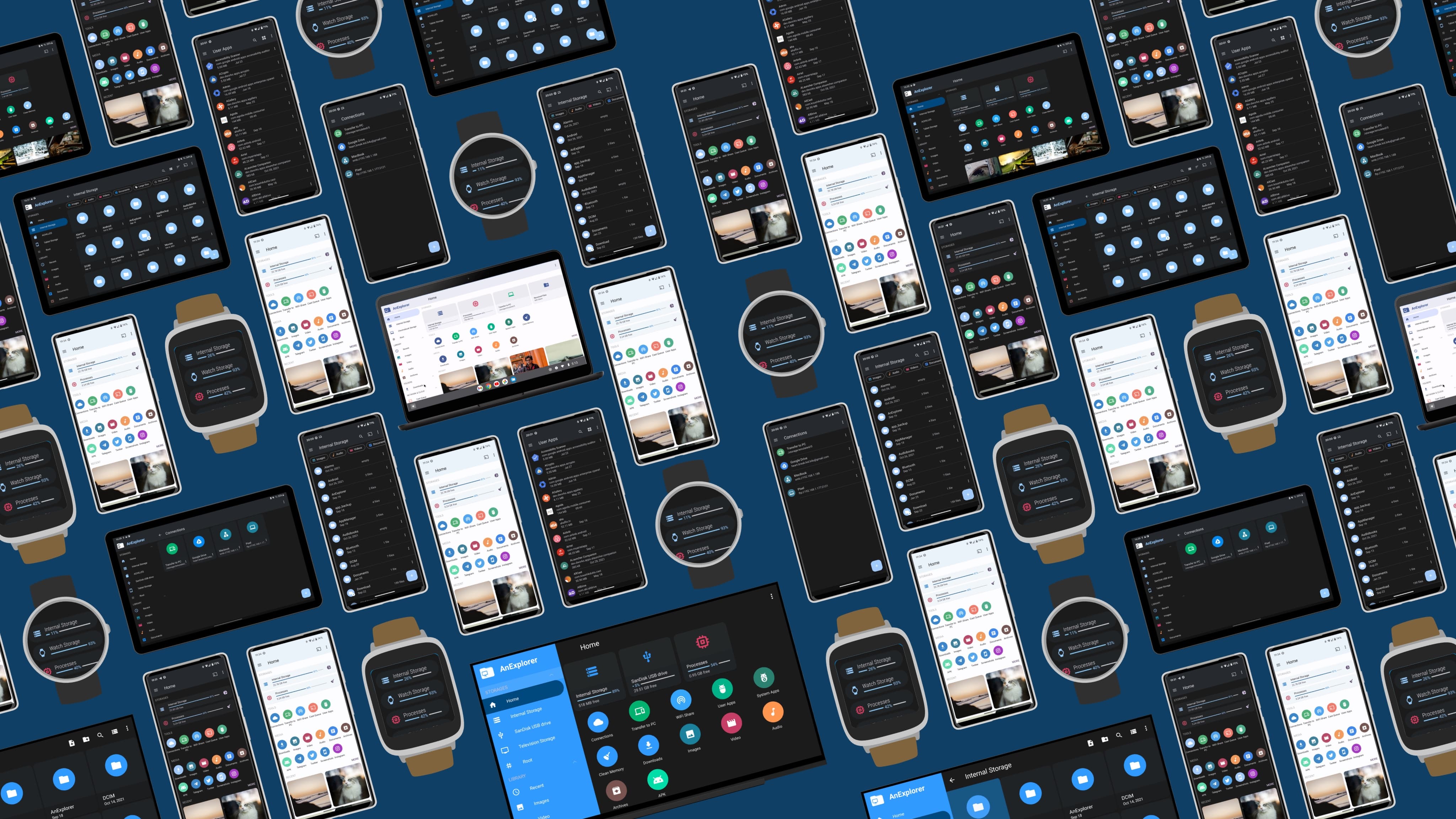
Getting Dropbox Files Onto Your Wrist
Smartwatches have become capable standalone devices, but their storage remains limited and their screens demand a different approach to file management. AnExplorer brings Dropbox access to Wear OS with a clear purpose: getting specific files onto your watch for offline use, rather than trying to replicate a full desktop cloud experience on a 1.4-inch display.
The reality of watch-based file management is that you already know what you need. You recorded a voice memo on your phone and want it on your wrist for the commute. You have a playlist in Dropbox that you want available during a run without carrying your phone. You exported workout data and want to archive it to the cloud. These targeted transfers are where AnExplorer on Wear OS genuinely shines.
Why Dropbox on a Smartwatch Makes Sense
The argument for cloud access on a watch centers on independence from your phone. Modern Wear OS watches with LTE connectivity or Wi-Fi can operate entirely on their own. When you leave your phone behind for a run, a gym session, or a quick errand, having access to specific cloud files means your watch becomes more than a notification mirror.
Dropbox integration in AnExplorer works through the standard Dropbox API, meaning your full account is technically accessible. However, we designed the watch interface around the assumption that you will navigate to known locations rather than explore. The folder tree is there, but the real workflow involves bookmarks, recent locations, and targeted downloads.
Practical File Types for Watch Storage
Not every file belongs on your wrist. The watch display cannot meaningfully render a spreadsheet or a multi-page PDF. Here is what actually works well:
Audio files dominate watch downloads. Music tracks, podcasts, audiobooks, and voice recordings stored in Dropbox can be pulled to the watch and played through Bluetooth earbuds without any phone involvement. AnExplorer handles MP3, AAC, FLAC, OGG, and WAV files, letting your watch function as a standalone music player.
Small documents have their place too. A single-page PDF with a boarding pass, a text file with notes, or a small image you need to reference — these are reasonable watch downloads. AnExplorer renders text files directly and can display images scaled to the watch screen.
Health and fitness data exports round out the watch storage use case. If your watch exports GPX tracks, sleep data CSVs, or heart rate logs, uploading them to Dropbox creates an automatic backup of health information that would otherwise exist only on the watch's limited storage.
The Download Workflow
Getting a file from Dropbox to your watch follows a deliberate path. AnExplorer does not auto-sync folders to the watch — that would drain battery and fill limited storage without your input. Instead, every download is intentional:
You open AnExplorer and navigate to the Cloud section. Dropbox appears alongside any other connected cloud accounts. Tapping into Dropbox shows your folder structure, rendered in a scrollable list optimized for the round watch display. Text is large enough to read, and folder icons help distinguish navigation levels.
Once you locate a file, a long-press opens the action menu. Download to Watch begins the transfer. Progress shows on screen, and a notification confirms completion. The file now lives in your watch's local storage, accessible without any internet connection from AnExplorer's Local tab.
For files you access regularly, AnExplorer supports bookmarks. Mark a Dropbox folder as a favorite, and it appears at the top of your cloud view. This eliminates repetitive navigation through the same path each time you want to refresh a particular file.
Managing Watch Storage
Wear OS watches typically offer 16 to 32 GB of internal storage, much of which is consumed by the operating system and installed apps. Realistically, you might have 8 to 20 GB available for downloaded files. AnExplorer shows your storage usage prominently, so you always know how much space remains.
When storage runs low, AnExplorer's local file browser lets you review and delete previously downloaded content. The cloud connection means deleted local files are not lost — they remain in Dropbox and can be re-downloaded anytime you need them again.
Offline Independence
The core value of Dropbox on Wear OS is independence from your phone. During a run, at the gym, or when you intentionally leave your phone behind, downloaded Dropbox content remains accessible. Audio plays through connected Bluetooth earbuds. Text files render on the watch display. Images show at watch resolution — small but identifiable.
This independence extends to uploads too. If your watch records voice memos, captures screenshots of workout data, or generates any files, AnExplorer can push them to Dropbox over Wi-Fi when you return to a connected environment. Your watch becomes a bidirectional node in your cloud ecosystem rather than a passive receiver.
Battery Considerations
Cloud operations consume battery. Wi-Fi or LTE data transfer, screen-on time during browsing, and processing during downloads all draw power. AnExplorer minimizes impact by completing transfers efficiently and allowing the radio to sleep afterward, but you should plan cloud operations when charging is accessible.
A practical pattern: set the watch on its charger, open AnExplorer, download what you need for the next outing, and let it charge while transferring. By the time the watch is fully charged, your content is ready. This avoids draining battery during the day for file management tasks.
Limitations to Acknowledge
The watch is not your primary Dropbox device. The screen cannot render complex PDFs readably. Spreadsheets are incomprehensible at this scale. Video playback on a 1.4-inch display is technically possible but not enjoyable. File browsing through deep folder hierarchies requires patience with small scrolling areas.
AnExplorer on Wear OS works best when you know where your file is and what you want to do with it. Exploratory browsing — casually flipping through folders looking for something — is tedious on a watch. The bookmark and recent files features exist specifically to reduce unnecessary browsing.
Related Guides
- Dropbox for Android Phones — Full Dropbox management on your primary device
- Dropbox for Smart Glasses — Stream Dropbox audio through glasses speakers
- OneDrive for Wear OS — Alternative cloud storage on your watch
- MEGA for Wear OS — Encrypted cloud downloads to your wrist