
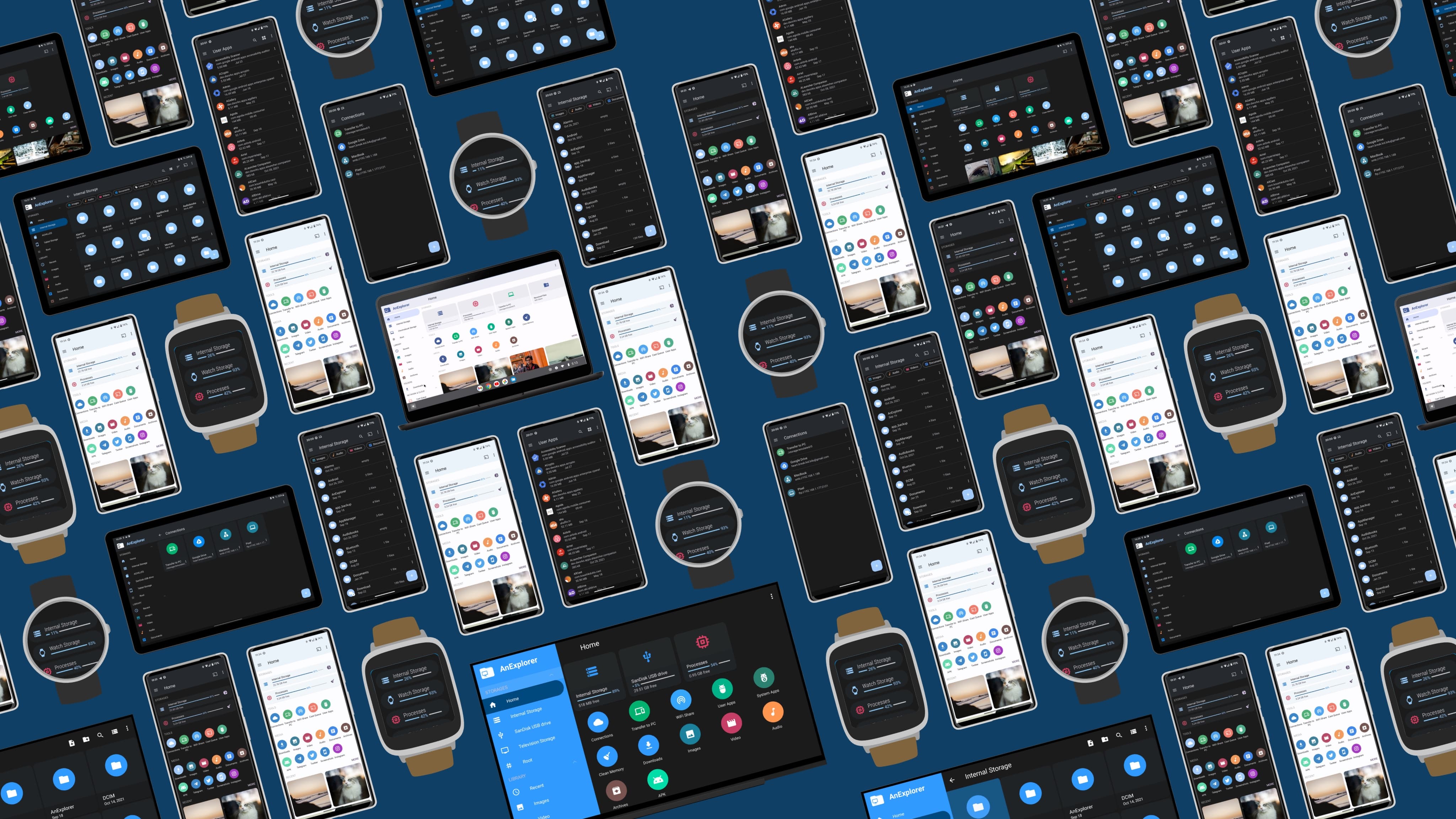
Dropbox on Chromebook — The Full File Manager Experience
Chromebook users access Dropbox through the web interface (dropbox.com). It works, but it's isolated. You can't easily copy a file from Dropbox to your NAS without downloading it to the Chromebook first and then uploading it separately. You can't extract a ZIP archive stored in Dropbox without downloading it, finding a tool to extract it, and re-uploading the contents. Every operation requires multiple steps across different apps and browser tabs.
AnExplorer changes this by putting Dropbox alongside all your other storage — local files, USB drives, NAS (SMB), and other cloud services — in a unified file manager. Operations that require multiple steps in the web interface become single operations: Dropbox → NAS copy, archive extraction from Dropbox, multi-cloud transfers, and cross-location file management.
The Problem with Dropbox's Web Interface on ChromeOS
| Task | Dropbox.com workflow | AnExplorer workflow |
|---|---|---|
| Copy Dropbox → USB | Download → Files app → copy to USB | Select → paste to USB (one operation) |
| Copy Dropbox → NAS | Download → mount NAS → copy | Select → paste to NAS (one operation) |
| Extract ZIP from Dropbox | Download → find extraction tool → extract | Tap → Extract (handled in-app) |
| Compare files across locations | Multiple tabs/windows | Side by side in one app |
| Bulk operations (rename, move) | Slow web interface, one at a time | Native app speed, batch operations |
| Offline access | Requires Dropbox desktop app (not on ChromeOS) | Download selected files for offline |
| Copy between clouds | Download → re-upload to other service | Direct copy between cloud services |
For basic file access, the web interface is fine. For actual file management work — moving content between locations, batch operations, and cross-platform workflows — AnExplorer is significantly more efficient.
Key Workflows
Dropbox ↔ USB Transfer
Common scenario: You have files in Dropbox that need to go on a USB drive (or vice versa).
Dropbox → USB:
- Open AnExplorer → navigate to Dropbox folder
- Select files/folders
- Copy → navigate to USB drive location
- Paste → files transfer directly
USB → Dropbox:
- Plug in USB drive
- Browse USB → select files
- Copy → navigate to Dropbox destination folder
- Paste → files upload to Dropbox
Use cases:
- Loading a USB drive with project files from Dropbox for offline work
- Backing up USB camera photos to Dropbox cloud storage
- Sharing files by copying from Dropbox to a USB drive for someone
- Archiving old Dropbox content to an external drive
Dropbox ↔ NAS Transfer
For users with a home NAS (Synology, QNAP, TrueNAS):
Dropbox → NAS:
- Connect to NAS via SMB in AnExplorer
- Browse Dropbox → select content
- Copy to NAS location → files download from Dropbox and upload to NAS
NAS → Dropbox:
- Browse NAS → select files
- Copy to Dropbox → files upload from NAS to Dropbox cloud
Use cases:
- Syncing project files between cloud collaborators (Dropbox) and home archive (NAS)
- Backing up important Dropbox content to personal NAS
- Making NAS content shareable by uploading to Dropbox (for sharing links)
- Moving large files from NAS to Dropbox for mobile access
Archive Extraction from Dropbox
Dropbox often contains archived files — project deliverables, shared assets, backup packages:
- Browse Dropbox in AnExplorer → find ZIP/RAR/7Z file
- Tap the archive
- Choose extraction destination:
- Extract to same Dropbox folder
- Extract to local Chromebook storage
- Extract to USB drive
- Extract to NAS
- AnExplorer downloads and extracts in one operation
No intermediate steps — the web interface would require: download → find extraction tool → extract → optionally re-upload contents.
Multi-Cloud Operations
AnExplorer connects to multiple cloud services simultaneously:
- Copy files from Dropbox → Google Drive
- Copy from Dropbox → MEGA (for encrypted backup)
- Move content between Dropbox → OneDrive
- Consolidate files from multiple clouds to one location
This is particularly useful when:
- Migrating between cloud services
- Creating redundant backups across providers
- Collaborating with people who use different cloud services
- Distributing large files across free-tier accounts
Dropbox Features in AnExplorer
Full file operations
- Browse complete Dropbox folder structure
- Copy, move, rename, delete files and folders
- Create new folders
- View file details (size, modification date)
- Sort by name, size, date, type
Shared content access
- View "Shared with me" files
- Access team/shared folders
- Same permissions as web interface (view-only stays view-only, edit stays edit)
Search
- Search for files by name within Dropbox
- Find content across folder hierarchy
- Faster than scrolling through web interface for large accounts
Offline considerations
- Download specific files/folders for offline access on Chromebook
- Files available without internet connection after download
- Manage which content is stored locally
Chromebook-Specific Advantages
Better than the mobile app
The Dropbox Android app on Chromebook is designed for phones — small touch targets, limited file operations. AnExplorer provides a proper file manager interface optimized for Chromebook's larger screen and keyboard/trackpad input.
Integration with ChromeOS workflow
- Access Dropbox files alongside ChromeOS Downloads, Linux files, Google Drive
- Drag and drop between locations (touchpad/mouse)
- Keyboard shortcuts for file operations
- Better use of Chromebook's display real estate
Performance on limited storage
Chromebooks often have just 64-128 GB of storage. Using AnExplorer to stream/access Dropbox content without downloading everything helps manage limited local space:
- Browse Dropbox content without syncing entire account locally
- Download only what you need, when you need it
- Delete local copies after use — content remains in cloud
Managing Large Dropbox Accounts
If you have years of Dropbox content (50+ GB):
Organization workflow
- Connect Dropbox in AnExplorer
- Sort by size → identify large files consuming quota
- Move unused large files to NAS or external storage
- Delete from Dropbox to free quota space
- Keep Dropbox for active files, NAS for archive
Finding and removing duplicates
- Sort files by size → look for identically-sized files
- Compare file names for duplicates across folders
- Delete duplicates from Dropbox to reclaim space
- AnExplorer's batch operations make this faster than web interface
Archiving old content
- Select old project folders in Dropbox
- Copy to NAS or external drive (permanent archive)
- Verify the copy is complete
- Delete from Dropbox → frees quota for new content
Dropbox Free vs Paid on Chromebook
| Tier | Storage | Monthly cost | Best with AnExplorer for |
|---|---|---|---|
| Basic (free) | 2 GB | $0 | Document sync, small projects |
| Plus | 2 TB | $12/month | Full workflow, media, projects |
| Professional | 3 TB | $20/month | Large media collections |
With 2 GB free: AnExplorer helps maximize limited space — transfer files out to NAS/USB when Dropbox fills up, rather than paying for more cloud storage.
With 2 TB paid: Full freedom to store everything; AnExplorer makes managing 2 TB of content practical with proper file management tools.
Tips for Chromebook + Dropbox + AnExplorer
- Pin frequently used Dropbox folders — bookmark them in AnExplorer for quick access
- Use Dropbox for sharing, NAS for archive — keep active/shared files in Dropbox, move completed work to NAS
- Extract archives in local temp — extract to Chromebook storage, verify contents, then copy to final destination
- Batch rename in AnExplorer — organize Dropbox files with bulk rename (something the web interface doesn't support)
- Regular cleanup — use AnExplorer's size sorting to find and manage large files in Dropbox
- Cross-cloud backup — copy critical Dropbox files to MEGA for encrypted backup (two clouds = double safety)
Related Guides
- Dropbox Cloud Feature — full Dropbox capabilities
- File Manager for Chromebook — ChromeOS file management
- USB OTG for Chromebook — USB drive access on ChromeOS
- SMB File Manager — NAS connection for Dropbox ↔ NAS workflow