
Android Storage Types — A Complete Guide
Android devices have multiple storage locations, each with different characteristics, speeds, and restrictions. Understanding them helps you manage space effectively and know where to store different types of content.
1. Internal Storage (Built-in)
What it is: Flash memory soldered into your phone. Non-removable, fast, and where Android installs everything by default.
Typical sizes: 64 GB, 128 GB, 256 GB, 512 GB, 1 TB
What lives here:
- Android OS (~15-25 GB)
- All installed apps
- App data and caches (
Android/data/) - Game assets (
Android/obb/) - Photos and videos (
DCIM/) - Downloads
- Everything else by default
Speed: 500-3000 MB/s (UFS 3.1/4.0) — the fastest storage on your device.
Key facts:
- Can't be removed or expanded (what you bought is what you have)
- Apps MUST install here (with rare exceptions)
- Android/obb and Android/data are always here
- When this fills up, your phone slows down and apps crash
Managing with AnExplorer:
- Sort by size to find large consumers
- Move media (photos, videos, music) to SD card or cloud
- Clear app caches (Memory Cleaner)
- Delete old downloads and APKs
2. SD Card (Removable External Storage)
What it is: A microSD card inserted into your phone's card slot (if available). Removable, swappable, and expandable.
Typical sizes: 64 GB, 128 GB, 256 GB, 512 GB, 1 TB
What you can store here:
- Photos and videos (set camera to save to SD)
- Music and podcasts
- Downloaded files
- Documents
- Some apps (if they support "move to SD card")
- Game ROMs (for emulators)
What you CAN'T store here:
- Most apps (they require internal storage)
- Android/obb game data (always internal)
- App databases and preferences (always internal)
Speed: 30-160 MB/s (depending on card class — A2 cards are fastest)
Key facts:
- Not all phones have SD card slots (flagships increasingly remove them)
- Requires SAF permission for write access on Android 11+
- Can be removed and used in another device (unless formatted as internal)
- Slower than internal storage — not ideal for apps
Managing with AnExplorer:
- Appears in sidebar automatically when inserted
- Grant SAF permission once for full write access
- Move DCIM folder to SD card to free internal space
- Format via Settings → Storage → SD card → Format
3. USB OTG (External USB Drives)
What it is: USB flash drives or external SSDs connected via USB-C (or USB-A with adapter).
Typical sizes: 16 GB to 4 TB
What you can do:
- Browse files on the drive
- Copy files between phone and USB drive
- Play media directly from USB
- Install APKs from USB drive
- Back up phone files to USB
Supported file systems:
- FAT32 — universal, but 4 GB file size limit
- exFAT — recommended (no size limits, works on Android + Windows + Mac)
- NTFS — read-only on Android (can't write without root)
Managing with AnExplorer:
- Auto-detected when plugged in
- Appears in sidebar
- Full read/write for FAT32 and exFAT
- Read-only for NTFS (format as exFAT for full access)
4. Cloud Storage (Remote)
What it is: Files stored on remote servers, accessed over internet/WiFi.
Services AnExplorer supports:
- Google Drive (15 GB free)
- Dropbox (2 GB free)
- OneDrive (5 GB free, 1 TB with M365)
- MEGA (20 GB free)
- Box, pCloud, Yandex Disk
Best for:
- Off-site backup (protects against phone loss/theft)
- Accessing files from multiple devices
- Sharing files with others via links
- Overflow storage when local is full
Limitations:
- Requires internet connection
- Upload/download speed depends on your connection
- Free tiers are limited (15-20 GB)
- Not suitable for apps or real-time access
5. Network Storage (NAS/SMB/FTP)
What it is: A server on your local network (Synology, QNAP, Windows PC with shared folders).
Best for:
- Large media libraries (movies, music, photos)
- Home backup destination
- Streaming content to TV/phone without copying
- Shared family storage
Managing with AnExplorer:
- Connect via SMB, FTP, SFTP, or WebDAV
- Browse as if it were local storage
- Copy files between NAS and phone/SD card
- Stream media directly without downloading
Where Android Stores Things (Default Locations)
| Content | Default location | Can move to SD? |
|---|---|---|
| Camera photos/videos | Internal → DCIM/Camera | ✅ (change in camera settings) |
| Screenshots | Internal → DCIM/Screenshots | ✅ (manually with AnExplorer) |
| Downloads | Internal → Download | ✅ (manually) |
| WhatsApp media | Internal → Android/media/com.whatsapp | ⚠️ (complex, app recreates) |
| App installs | Internal (always) | ⚠️ (few apps support it) |
| Game data (OBB) | Internal → Android/obb | ❌ (must stay internal) |
| App caches | Internal → Android/data | ❌ (managed by apps) |
| Music downloads | Internal → Music | ✅ |
| Podcast downloads | Internal (app-specific) | ⚠️ (depends on app) |
Practical Storage Strategy
For phones WITH SD card slot:
- Internal: apps, games, active projects
- SD card: photos, videos, music, downloads, archives
- Cloud: backup of important files, off-site protection
- NAS: large media library, complete backups
For phones WITHOUT SD card slot:
- Internal: everything (manage carefully)
- Cloud: overflow storage, backup
- NAS: large media library, photo backup
- USB OTG: occasional large transfers, temporary storage
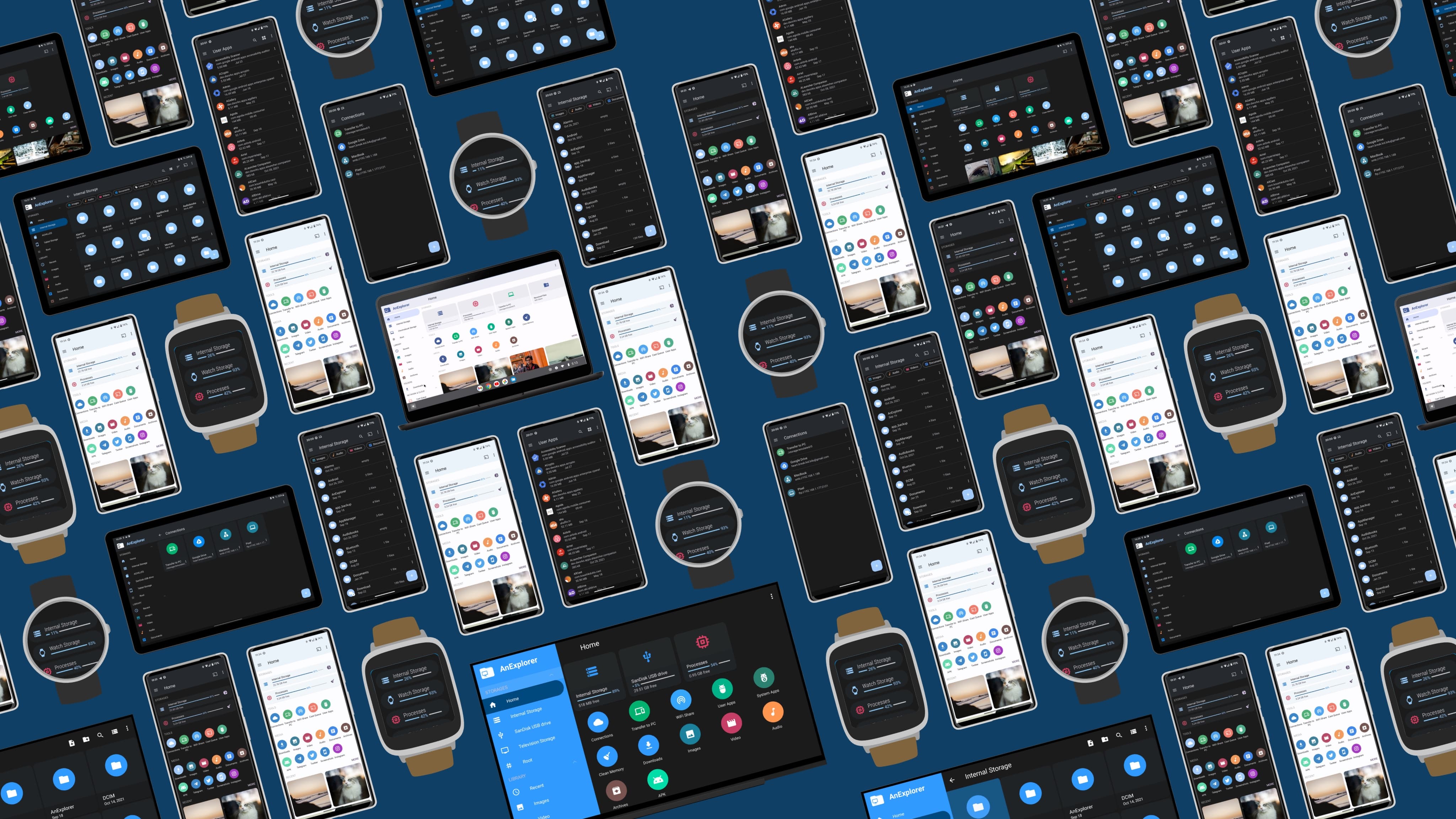
AnExplorer's role: Unified access to all storage types from one sidebar. Move files between any combination — internal ↔ SD ↔ USB ↔ cloud ↔ NAS.
Related Guides
- Android Storage Full — free up space
- SD Card Not Showing — fix detection issues
- USB OTG Not Working — fix USB drive issues
- Move Files to SD Card — offload to external storage
- Cloud Storage — all 7 supported services