
Working with OneDrive Inside Your VR Headset
Virtual reality headsets are evolving beyond gaming into productivity devices, and file management is a fundamental part of that transition. AnExplorer runs as a 2D panel inside your VR environment, giving you direct access to OneDrive — Microsoft's cloud ecosystem — without removing your headset or reaching for a phone.
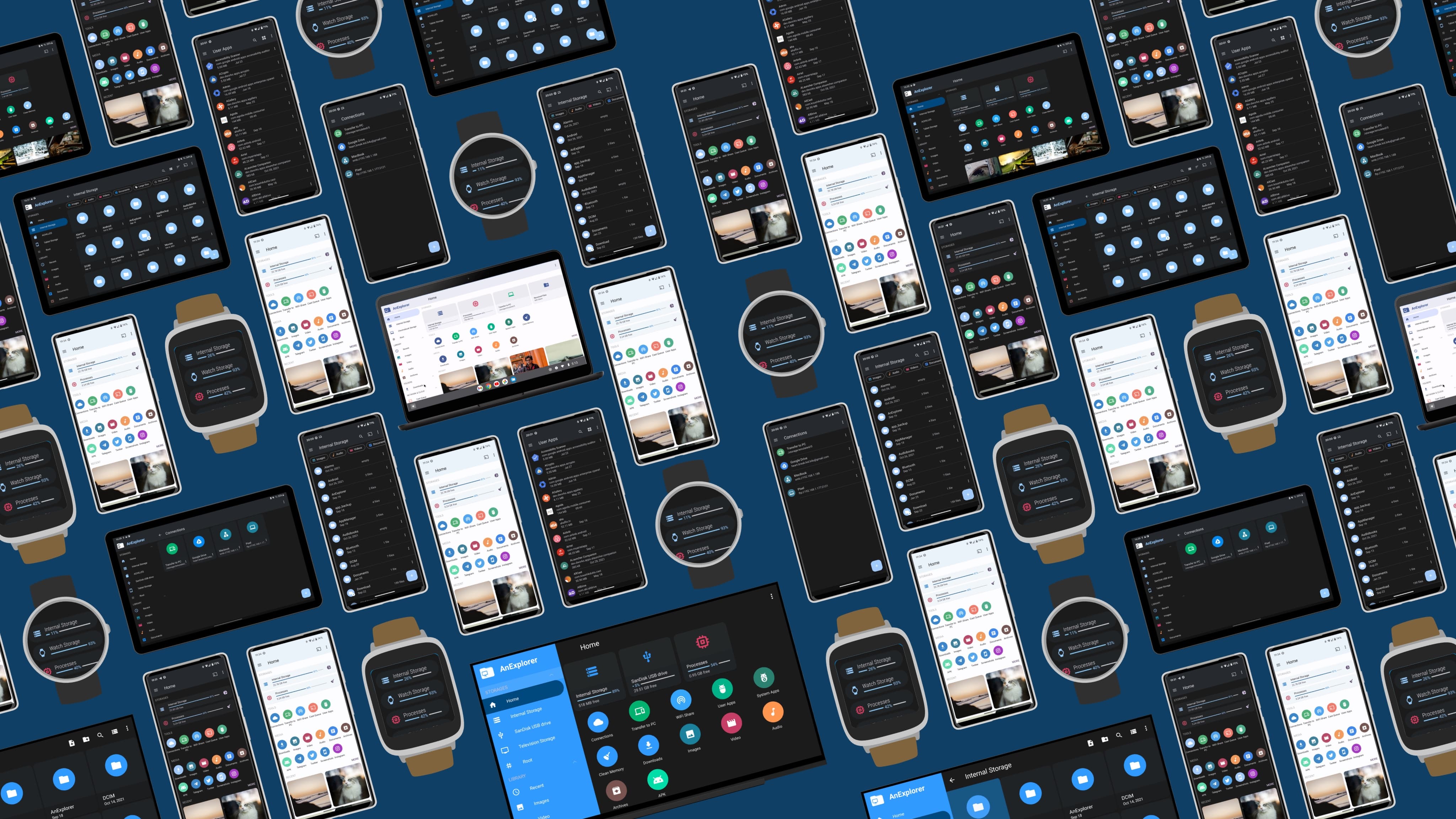
The experience is honest about what it is: a floating file manager window in your virtual space. AnExplorer does not attempt to render your OneDrive as a 3D spatial environment with files floating in mid-air. Instead, it provides the familiar file browser interface you know, rendered crisply on a virtual panel that you can position, resize, and interact with using your VR controllers or hand tracking.
This matters because OneDrive is where work lives for millions of Microsoft 365 users. Documents, spreadsheets, presentations, and shared team files all sit in OneDrive. When you are in a VR productivity session — perhaps using a virtual desktop or immersive workspace app — having direct cloud file access eliminates the friction of switching between devices.
The 2D Panel Reality
Let us be clear about what "OneDrive in VR" means practically. You are looking at AnExplorer through a virtual window. The interface is flat. You scroll with controller thumbsticks or hand gestures. You tap buttons by pointing and clicking. It is not fundamentally different from using the app on a tablet, except that the "tablet" hovers in your virtual space at whatever size and position you choose.
This is actually advantageous for file management. The familiar 2D interface means zero learning curve. You already know how to navigate folders, select files, and manage storage. The VR context simply means you can do this without breaking your immersion in an extended reality session.
Resolution on modern VR headsets like Quest 3 or Pico 4 makes text reading comfortable. File names, folder structures, and metadata are all legible at normal viewing distances. Earlier headset generations struggled with text clarity, but current displays render the AnExplorer interface sharply enough for productive file work.
Microsoft 365 Integration in VR
OneDrive is not an isolated file store — it is woven into Microsoft 365. This integration provides specific advantages when accessed from VR:
Teams meeting recordings land in OneDrive automatically. During a VR productivity session, you can access recordings from meetings you missed without switching to a phone or PC. Download the recording, play it in a media player app, or review transcription files that accompany it.
SharePoint document libraries appear alongside your personal OneDrive. If your team stores project files in SharePoint, those same files are browsable through AnExplorer in VR. Download specifications, reference designs, or presentations to the headset for local viewing during focused work sessions.
Shared folders and collaboration spaces show files others have shared with you. Pull down the latest version of a collaborative document without leaving your VR workspace. This keeps your workflow contained within the headset rather than fragmenting attention across multiple physical devices.
Downloading Files to the Headset
VR headsets have substantial storage — typically 128 to 512 GB — compared to watches or glasses. This means downloading OneDrive content for local access is practical at a much larger scale. Project folders, media libraries, and document archives can live locally on the headset for low-latency access without constant cloud connectivity.
AnExplorer's download manager handles multiple files and entire folders. Select a project folder in OneDrive, tap download, and the entire structure replicates locally on the headset. This is particularly useful before offline sessions where Wi-Fi availability is uncertain, such as travel or locations with restricted connectivity.
Downloaded files integrate with the headset's local file system. Other VR apps that access local storage can open files downloaded through AnExplorer. This creates a workflow where AnExplorer acts as the cloud bridge and other specialized apps (document viewers, media players, 3D model viewers) consume the downloaded content.
Authentication and Security Considerations
VR headsets raise unique security concerns for Microsoft account access. Headsets are often shared among family members or colleagues. Some live in public spaces like offices or demonstration areas. OneDrive access in these contexts requires awareness:
Multi-user support varies by headset. Quest devices support multiple accounts at the system level, which isolates OneDrive credentials between users. On headsets without multi-user support, anyone who puts on the device potentially accesses your OneDrive.
AnExplorer offers sign-out functionality specifically for shared scenarios. If your headset circulates among multiple people, sign out of cloud accounts after each session. Your credentials do not persist between sessions if you explicitly disconnect.
Microsoft's conditional access policies apply in VR just as they do on other devices. If your organization requires device compliance, multi-factor authentication, or network restrictions, those same policies gate OneDrive access from the headset. AnExplorer does not bypass any enterprise security — it authenticates through the same Microsoft identity platform used everywhere else.
Practical VR Workflows with OneDrive
The most realistic VR+OneDrive workflows are:
Reference material access: Open a 2D panel with AnExplorer alongside your VR workspace. Pull up specifications, reference images, or documentation from OneDrive while working in other VR applications. The panel acts like a second monitor dedicated to file access.
Media organization: Use the large virtual panel to organize your OneDrive media files — photos, videos, music — with the benefit of a spacious virtual workspace. Sort, rename, and move files using the comfortable 2D interface at whatever virtual panel size suits you.
Pre-session preparation: At the start of a VR work session, download all necessary files from OneDrive to local headset storage. This ensures low-latency access throughout the session regardless of network conditions.
End-session archival: After creating content in VR — notes, recordings, 3D exports — upload them to OneDrive through AnExplorer for backup and cross-device access. Files created in VR become available on your phone, PC, and other devices through OneDrive sync.
Related Guides
- OneDrive for Wear OS — OneDrive files on your smartwatch
- OneDrive for Android Automotive — Microsoft cloud media in your car
- OneDrive for Smart Glasses — Stream OneDrive audio to glasses
- Dropbox for VR Headsets — Alternative cloud access in VR